By Chula Vista HVAC Pros · 2026-11-17 · Chula Vista, CA
Prepare your AC for summer in Chula Vista — the spring checklist: filter, coil, drain, thermostat and the test run that finds problems early.

Summer in Chula Vista does not arrive all at once. The marine layer keeps mornings mild well into June, and then a Santa Ana pattern or an inland heat spike pushes the east side into the 90s with a few days' warning. The air conditioners that fail on those first hot days are almost always the ones that went into summer unprepared — a dirty coil, a low refrigerant charge, a capacitor that was already marginal. Preparing the system in spring is a short checklist, and it is the difference between a summer that goes smoothly and a summer that starts with an emergency call.
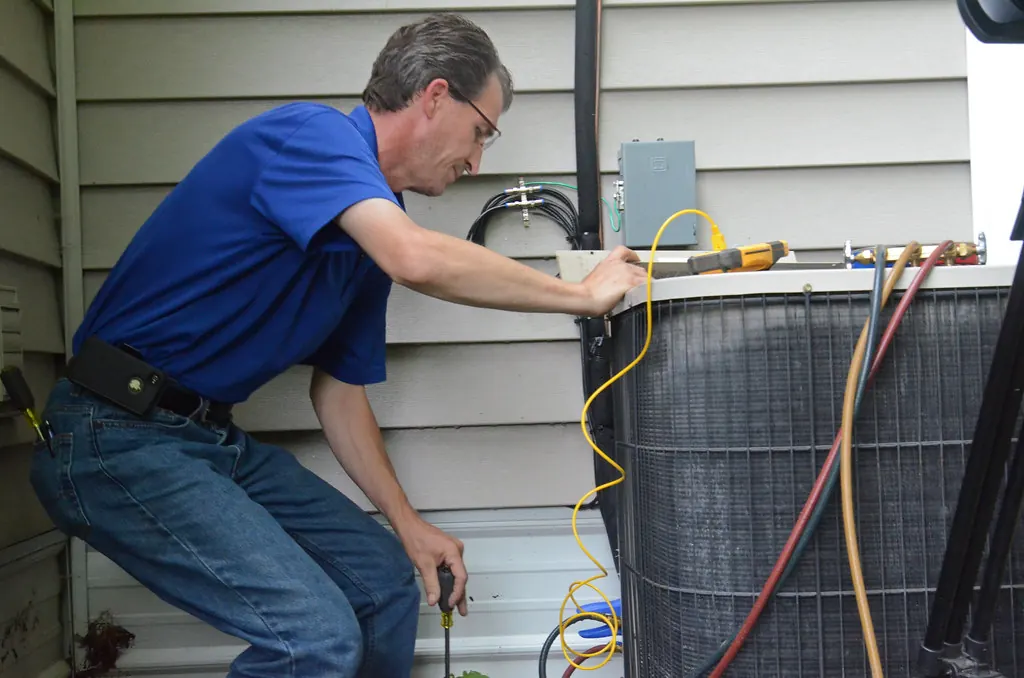
The yearly service visit — coil cleaning, refrigerant checks, capacitor and electrical testing, drain clearing, and a full test run — should happen in spring, before the cooling season. The reason is simple: a tune-up finds the capacitor that is about to fail, the refrigerant that is low, and the drain that is about to block, and all three are found while the weather is still forgiving. A tune-up booked in July finds the same problems, but it finds them after the system has already been working its hardest — and after the first heat wave has already tested it. The spring visit is the cheapest maintenance the system gets, and it is the visit that prevents most summer breakdowns. Book it for the neighborhood's heat, not the calendar: a system in Eastlake or Otay Ranch will be tested in May, while a system near the bayfront may not feel the heat until July.
The filter is the simplest item on the checklist and the one that causes the most preventable breakdowns. Change it in spring, before the cooling season, and check that it is the right size for the system — a filter that does not fit leaves gaps for dust to bypass it, and a filter so dense it chokes an older blower causes the same problem as a dirty one. Write the date on the filter frame so you know when it was last changed, and plan to check it monthly through the summer. Chula Vista's dry months load filters with dust quickly, and a home with pets loads them faster still. A clogged filter restricts airflow, the coil gets too cold, ice forms, and the system stops cooling — a chain that starts with a filter and ends with an emergency call.
The outdoor unit has spent the winter collecting leaves, dust, and debris, and it needs to breathe before the summer. Clear at least two feet around it — plants, stored items, leaves piled against the cabinet — and rinse the coil fins gently with a hose to remove the dust that insulates them. Do not use a pressure washer, which bends the thin fins, and do not cover the unit tightly for winter, which traps moisture and corrodes the coil. A coil that looks clean from the street can be clogged enough to cost the system a noticeable share of its capacity, and in Chula Vista's dry climate the dust builds up faster than most homeowners expect. Coil cleaning is not cosmetic work here — it is the single most effective thing a tune-up does for a system in this climate.
The condensate drain carries water out of the system all summer, and it blocks easily — dust and algae build up in the small line, and when it blocks, the safety switch shuts the system down or the water overflows into the home. Pour a cup of water mixed with a little vinegar down the drain access in spring to slow the growth that blocks it, and have the drain cleared during the tune-up. The thermostat deserves a check too: confirm it is set to Cool, replace the batteries if it is a battery model, and check its reading against the actual room temperature. A thermostat on a sun-warmed wall, or one that has drifted a few degrees, makes the whole system behave badly — and it is a five-minute check that prevents a season of discomfort.
The final step is a test, not a task. Run the system for a full afternoon in May — a warm day, not a mild one — and check that every room cools evenly, that the air from the vents is cold, and that the system cycles normally rather than running constantly. If a room stays warm, if the system runs without reaching the set temperature, or if there are new noises at startup, have it checked before the real heat arrives. Finding a weak system in May beats finding it in July, when the house is already hot and the repair is an emergency. The test run is the step that turns the checklist into knowledge: the system is not just serviced, it is proven.
The May test run is a simple procedure, and it is worth doing properly. Pick a warm afternoon — not a mild morning, but a day when the sun is strong and the house would normally need cooling. Set the thermostat to Cool, set the temperature a few degrees below the room temperature, and let the system run. Walk through the house with your hand at each vent: the air should feel cold, and the flow should feel strong, in every room. Note the rooms that feel weaker, and the rooms that feel warmer — those are the rooms the system is struggling to serve. Listen at the outdoor unit: the fan should spin steadily, the compressor should hum evenly, and there should be no grinding, buzzing, or banging. Let the system run for a full hour, and watch whether it cycles normally — running, satisfying the thermostat, shutting off — or whether it runs constantly without reaching the set temperature. A system that runs constantly has lost capacity somewhere, and the cause is usually a dirty coil, low refrigerant, or weak airflow. If anything is wrong — a warm room, weak airflow, a new noise, a system that never cycles off — have it checked before the real heat arrives. The test run is the step that turns the checklist into knowledge: the system is not just serviced, it is proven, and a system that is proven in May is a system that can be trusted in July.
The May test run tells you whether the system works. The tune-up tells you why it works the way it does — and what is wearing out. The capacitor is the part the tune-up is most likely to find weakening: it can be tested before it fails, and a capacitor that tests weak in spring is a capacitor that will fail in July, when the system runs long cycles in sustained heat. The refrigerant is the second finding: a charge that is low in spring is a leak that has been developing all winter, and finding it in spring means the repair happens on a schedule rather than in a crisis. The coil is the third: a dirty outdoor coil is the single most common efficiency loss in Chula Vista's dry climate, and cleaning it in spring restores the capacity the system has been losing all year. The drain is the fourth: a line that is starting to block in spring will block completely in summer, when the system produces the most condensate, and clearing it in spring prevents the overflow that shuts the system down — or floods the area around it. And the electrical connections are the fifth: loosened by vibration, corroded by coastal air, they are checked and tightened in spring, before the heat makes them arc. Each finding is small. Together, they are the difference between a system that survives the summer and one that does not — and the tune-up is the visit that finds them while there is still time to fix them calmly.
The habit that matters most is the May test run, because it is the habit that turns the checklist into knowledge. The filter can be changed, the coil can be cleaned, the drain can be cleared — and the system can still be weak, because a capacitor is failing or the refrigerant is low, and neither of those shows itself until the system is asked to run hard. The test run asks it: a full afternoon, a warm day, every room checked, the outdoor unit listened to, the cycling watched. A system that passes the test run is a system that can be trusted in July. A system that fails it is a system that can be repaired in May, on a schedule, rather than in July, in a crisis. The rest of the checklist is preparation. The test run is proof. And proof is what matters when the heat arrives, because a system that was proven in May is a system that will not surprise the household in July — and in a climate where the heat arrives suddenly, not being surprised is the whole point of preparing at all.

How often does an AC need servicing in Chula Vista? The yearly schedule, what a tune-up covers, and why spring is the time to book.
Read more →
Repair or replace your AC in Chula Vista? The age, cost, and condition factors that decide it — and the questions to ask before you choose.
Read more →
How long does an AC last in San Diego County? The typical lifespan, what shortens it, and the habits that add years to your system.
Read more →In spring, before the first heat wave. The marine layer keeps mornings mild into June, and then the inland heat arrives suddenly. A spring tune-up and a May test run find problems while the weather is still forgiving.
Change the filter, clear the outdoor unit, check the drain, verify the thermostat, and run the system for a full afternoon to confirm every room cools evenly.
Every one to three months, and monthly if the home has pets or sits near open lots where dust is heavy. A clogged filter is the most common cause of frozen coils and weak cooling.
No — do not cover it tightly. Trapped moisture corrodes the coil and the electrical compartment. A clear unit with room to breathe is better than a covered one.
Have it checked before the real heat arrives. A system that cannot keep up in May will not keep up in July, and the repair is far easier to schedule in spring than in the middle of a heat wave.
Describe the symptoms — what the system is doing, which rooms are affected, and whether the outdoor unit is running — and get a clear next step.
For AC repair, furnace repair, heat pump and mini split service, and maintenance across Chula Vista and San Diego County, reach out through the contact page.