hello@chulavistahvacpros.comMon–Fri 7:00 AM–10:00 PM ET · Sat 8:00 AM–10:00 PM ET · Sun 7:00 AM–9:00 PM ET
Home › Blog › Maintenance
Maintenance

How Often Should Your AC Be Serviced in Chula Vista?

By Chula Vista HVAC Pros · 2026-11-17 · Chula Vista, CA

How often does an AC need servicing in Chula Vista? The yearly schedule, what a tune-up covers, and why spring is the time to book.
Air conditioning filter being checked during service
Quick answer: Service your AC once a year in spring, before the first heat wave. Inland homes and homes with pets benefit from a filter check every month through the summer. A tune-up covers coil cleaning, refrigerant checks, electrical testing, and drain clearing — the four things that cause most summer breakdowns.

The short answer is once a year, before the cooling season. The longer answer is that the right interval depends on where in Chula Vista you live, how many hours your system runs, and how much dust it breathes — and in this city, those three things vary more than most homeowners realize. A system in Eastlake runs far more hours than a system near the bayfront, and a home with pets loads its filter faster than a home without them. The once-a-year rule is the floor, not the ceiling.

The once-a-year rule — and why spring is the time

An air conditioner that is serviced once a year lasts longer, cools better, and breaks down less often than one that is not. That is not a claim about a brand or a product — it is the mechanics of the machine. A clean coil transfers heat properly. A correct refrigerant charge cools the house without straining the compressor. A tight electrical connection does not arc and burn. A clear drain does not flood the air handler. The yearly service is the visit that checks all four of those things, and spring is when it should happen. Chula Vista's heat arrives in waves, not all at once. The marine layer keeps mornings mild well into June, and then a Santa Ana pattern or an inland heat spike pushes the east side into the 90s with little warning. The systems that fail on those first hot days are almost always the ones that went into summer with a dirty coil, a low charge, or a capacitor that was already marginal. A spring tune-up finds those weaknesses while the weather is still forgiving — and the repair, if one is needed, happens on a schedule rather than in a crisis.

Where you live in Chula Vista changes the answer

Chula Vista is really two climates in one city. Homes west of I-805 get the marine layer and cooler afternoons, so their systems cycle less and last longer between failures. Homes east of the freeway — Eastlake, Rancho del Rey, Otay Ranch — sit in the warmer inland pocket, where summer afternoons regularly run into the high 80s and low 90s. A system in those neighborhoods works harder, accumulates more operating hours, and wears its components faster. The practical consequence is that an inland system deserves its yearly service without fail, and its filter deserves checking monthly through the summer. A west-side system can follow the same schedule — the yearly visit is still the standard — but the consequences of skipping a year are milder there, because the system simply works less hard. The service interval is the same; the urgency is not.

What a tune-up actually covers

A tune-up is not a filter change. It is a checklist, and the checklist matters more than any single item on it. The outdoor coil is cleaned so the system can reject heat — in Chula Vista's dry climate, dust coats the coil faster than most homeowners expect, and a dirty coil is the single most common efficiency loss in the city. The refrigerant pressures are measured and compared with the manufacturer's specifications, so a slow leak is found before it becomes a no-cool call. The capacitor is tested — it is the part most likely to fail in summer heat, and it can be tested before it fails. The blower and filter are checked, the condensate drain is cleared, the thermostat is verified against the actual room temperature, and the system is run through a full cooling cycle with the temperature split measured at the vents. Each check is small; together they are the difference between a system that survives the summer and one that does not.

The filter is a separate schedule

The filter is not a once-a-year item — it is a one-to-three-month item, and in some homes it is a monthly item. The right interval depends on the home: pets, the number of people, how close the house sits to open lots where dust is heavy, and how many hours the system runs. A filter that is changed late restricts airflow, and restricted airflow is the start of the most common chain of failures in this climate: the coil gets too cold, ice forms, the system stops cooling, and the compressor is put at risk. Writing the date on the filter frame when it is changed is a small habit that prevents that chain. And the filter size matters — a filter that does not fit, or a filter so dense it chokes an older blower, causes the same problem as a dirty one.

What happens when service is skipped

A system that is not serviced does not fail all at once. It degrades gradually, and the degradation is easy to miss because it happens over months: the coil gets a little dirtier, the refrigerant drops a little lower, the capacitor weakens a little more. The house still cools, just a little less well, and the electric bill climbs a little higher. Then the first heat wave arrives, the system is asked to run long cycles in sustained heat, and the weakness that was invisible in May becomes a failure in July. The repair that would have been a capacitor replacement in spring becomes an emergency call in summer — and if the compressor has been strained by months of running with low refrigerant or a dirty coil, the repair can be larger than it needed to be. The yearly service is not a luxury for a system in this climate. It is the cheapest maintenance the system gets.
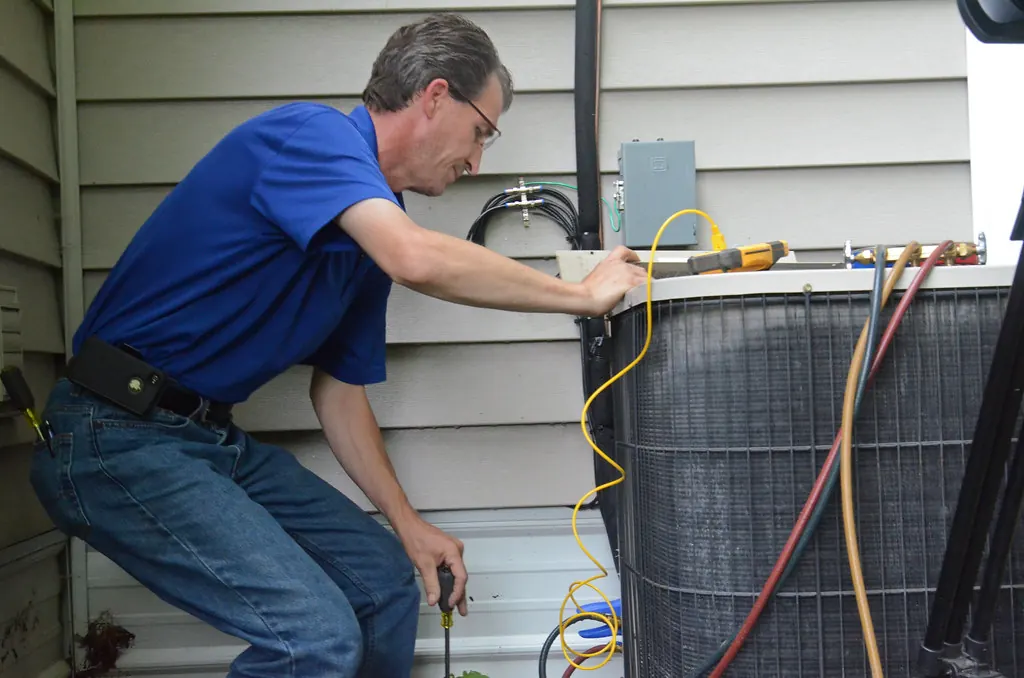

The cost of skipping service — what degradation looks like

A system that is not serviced does not fail all at once — it degrades, and the degradation is easy to miss because it happens gradually. The coil gets a little dirtier each month, and the system's capacity drops a little with it. The refrigerant drops a little lower through a slow leak, and the compressor works a little harder on every cycle. The capacitor weakens a little more with every heat wave, and the electrical connections loosen a little more with every vibration. None of these changes is noticeable on its own. The house still cools, just a little less well. The electric bill climbs a little higher. The system runs a little longer. And then the first heat wave arrives, the system is asked to run long cycles in sustained heat, and the weakness that was invisible in May becomes a failure in July — a capacitor that gives out, a compressor that overheats, a coil that freezes. The repair that would have been a capacitor replacement in spring becomes an emergency call in summer, and if the compressor has been strained by months of running with low refrigerant or a dirty coil, the repair can be larger than it needed to be. The yearly service is not a luxury for a system in this climate. It is the cheapest maintenance the system gets, and the cost of skipping it is paid in the summer — in discomfort, in emergency calls, and in the electric bill that climbs a little higher every month the system runs unmaintained.

The filter schedule for your home — not the generic one

The generic advice is to change the filter every one to three months, and the generic advice is correct as far as it goes — but the right interval for a specific home depends on the home, and the difference matters. A home with two dogs and a cat loads a filter far faster than a home with no pets, because pet hair and dander collect on the filter media and restrict airflow within weeks. A home near open lots, or near a road where dust is heavy, loads its filter faster than a home on a quiet, paved street with established landscaping. A home where the system runs twelve hours a day in summer loads its filter faster than a home where the system runs six. And a home with a family member who has allergies needs the filter changed on the shorter end of the interval, because the filter is doing double duty as an air-quality device as well as an equipment protector. The way to find the right interval is to check the filter monthly for the first summer: pull it out, hold it up to the light, and look at how much light passes through. A filter that is visibly gray or clogged after a month needs a monthly change. A filter that still looks clean after three months can go three months. After one season of checking, the interval is known — and it is the interval for that home, not the generic one. Write the date on the filter frame when it is changed, so the interval is visible and the habit is easy to keep. The filter is the cheapest part of the system and the most common cause of preventable breakdowns, and the right schedule for the home is the one that keeps it clean.

The one-year rule, in practice, is simple: book the tune-up in spring, check the filter monthly through the summer, and run the system for a full afternoon in May. Those three habits are the whole maintenance program for most Chula Vista homes, and they are the habits that keep a system out of the emergency column. The tune-up finds the capacitor that is weakening, the refrigerant that is low, and the drain that is about to block. The filter check keeps the coil from freezing. The May test run proves the system works before the heat arrives. A household that does those three things will still need the occasional repair — no maintenance program prevents every failure — but the failures will be fewer, smaller, and found earlier, when they are cheaper to fix. And the system will last longer, cool better, and cost less to run, which is the return on the small amount of attention it asks for each year.

Related reading

Air conditioning filter being checked during service

AC Repair vs Replacement in Chula Vista: How to Decide

Repair or replace your AC in Chula Vista? The age, cost, and condition factors that decide it — and the questions to ask before you choose.

Read more →
Air conditioning filter being checked during service

How Long Do Air Conditioners Last in San Diego County?

How long does an AC last in San Diego County? The typical lifespan, what shortens it, and the habits that add years to your system.

Read more →
Air conditioning filter being checked during service

Why Does My AC Freeze Up? Causes and What to Do

Why does an AC freeze up in Chula Vista? The airflow and refrigerant causes, what to do when you see ice, and how to stop it happening again

Read more →
Questions

Questions about how often should your ac be serviced in chula vista?

How often does an AC need servicing in Chula Vista?

Once a year before the cooling season is the standard recommendation. Inland homes, where systems run longer and harder, should not skip the yearly visit, and their filters should be checked monthly through the summer.

What does an AC tune-up include?

Coil cleaning, refrigerant pressure checks, capacitor and electrical testing, blower and filter inspection, condensate drain clearing, thermostat verification, and a full cooling-cycle test run with temperature readings.

When is the right time for a tune-up?

Spring, before the first heat wave. The marine layer keeps mornings mild well into June, and then the inland heat arrives suddenly. A spring tune-up finds the weaknesses while the weather is still forgiving.

Can a tune-up prevent breakdowns?

It prevents most of them. A tune-up finds the capacitor that is about to fail, the refrigerant that is low, and the drain that is about to block — the three most common causes of summer breakdowns.

How often should I change my filter?

Every one to three months, and monthly through the summer if the home has pets or sits near open lots where dust is heavy. A clogged filter is the most common cause of frozen coils and weak cooling.

Need heating or cooling help in Chula Vista?

Describe the symptoms — what the system is doing, which rooms are affected, and whether the outdoor unit is running — and get a clear next step.

Call Now

Contact

Get in touch

For AC repair, furnace repair, heat pump and mini split service, and maintenance across Chula Vista and San Diego County, reach out through the contact page.

Call Now

Service details

HoursMon–Fri 7:00 AM–10:00 PM ET · Sat 8:00 AM–10:00 PM ET · Sun 7:00 AM–9:00 PM ET Emailhello@chulavistahvacpros.com AreasChula Vista, San Diego, National City, Imperial Beach, Bonita, La Mesa, El Cajon, Lemon Grove, Spring Valley, Coronado, Santee ZIPs91910, 91911, 91913, 91914, 91915
☎ Call Now
Chula Vista HVAC ProsHeating & cooling help — Chula Vista & San Diego County