By Chula Vista HVAC Pros · 2026-11-17 · Chula Vista, CA
How long does an AC last in San Diego County? The typical lifespan, what shortens it, and the habits that add years to your system.

A central air conditioner in San Diego County typically lasts around fifteen years, and a well-maintained one can last longer. But that number is an average over a county that contains several different climates, and the lifespan of a system in Chula Vista depends on where in the county it sits, how many hours it runs, and how it has been treated. A system near the bayfront, running a few hundred hours a year, ages differently from a system in El Cajon or in Chula Vista's inland neighborhoods, running long cycles through a hot summer.
Fifteen years is the typical useful life of a central air conditioning system — the point at which the major components have accumulated enough wear that failures become frequent and the efficiency has declined enough to notice. It is not a deadline: a system does not stop working on its fifteenth birthday. Some systems run for twenty years with only minor repairs; others need a compressor at twelve. The difference is not luck. It is maintenance, operating hours, and the environment the equipment lives in. A system that has been serviced every year, with its coil cleaned and its refrigerant checked, will outlast a system of the same age that has never been serviced — and the difference is measured in years, not months.
San Diego County holds several climates, and the operating hours vary widely between them. A coastal system in La Jolla or Coronado runs a fraction of the hours a system in El Cajon or Santee runs, because the coastal afternoons stay in the 70s while the inland valleys push into the 90s. Chula Vista sits in the middle: the bayfront neighborhoods run a light load, and the inland neighborhoods — Eastlake, Rancho del Rey, Otay Ranch — run a heavy one. A system in the inland neighborhoods accumulates more operating hours per year, and its components — the compressor, the capacitor, the fan motor — wear faster for it. The lifespan follows the hours, not the calendar.
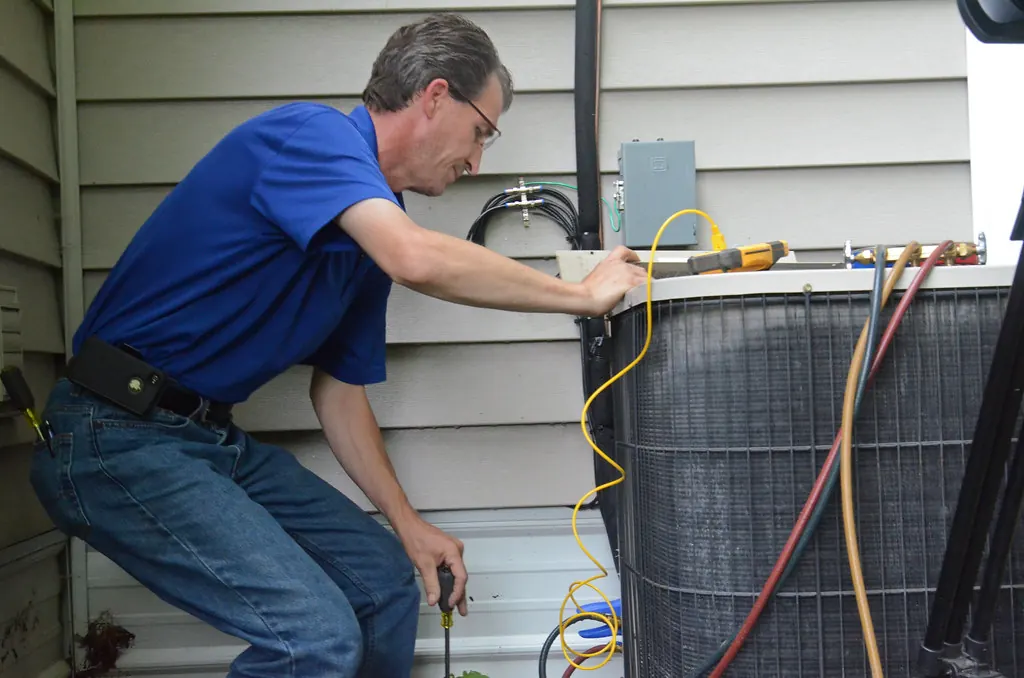
The first is the yearly service: coil cleaning, refrigerant checks, electrical testing, and drain clearing before the cooling season. The second is the filter: a filter changed on schedule protects the coil, the blower, and the compressor from the dust and the strain that shorten their lives. The third is the outdoor unit: kept clear of plants and debris so it can breathe, and rinsed gently in spring so the coil can reject heat. These three habits are unremarkable, and they are also the whole secret. Most of the systems that fail early in this county fail because one of the three was neglected for years — a coil that was never cleaned, a filter that was changed late, a capacitor that was never tested until it failed.
The fastest way to shorten a system's life is to run it with low refrigerant. A slow leak that goes unnoticed for a season or two starves the compressor of the cooling it needs, and the compressor overheats a little more on every cycle. The second is running it with a dirty coil or a clogged filter, which has the same effect by a different route — the system works harder for less cooling, and the compressor pays for it. The third is oversizing: a system that is too large for the house short-cycles, starting and stopping far more often than it was designed to, and the constant starting wears out the compressor and the electrical components. All three are preventable, and all three are found during a routine service visit.
There comes a point where the age on the nameplate stops being the useful question, and the repair history takes over. A system that needs a major component every season — a capacitor this year, a fan motor last year, a coil leak the year before — is telling you that its components are aging together, and that the next failure is already developing. At that point, the decision is not about whether the system is old enough to replace. It is about whether the money spent on the next repair buys enough remaining life to be worth it. A load calculation, a duct inspection, and an honest look at the repair history give you that answer — and they give it in numbers, not in guesses.
Every air conditioner carries a nameplate with its model and serial number, and the serial number usually encodes the date it was manufactured — a detail that matters when the system's age is in question. The nameplate is on the outdoor unit, usually on a label on the side of the cabinet, and it lists the model, the serial, the refrigerant type, and the electrical ratings. The refrigerant type is the detail that dates the system most clearly: a system running on a phased-out refrigerant is at least as old as the phase-out, and servicing it will only get harder as supply tightens. The serial number's date code varies by manufacturer, but the installing company or a technician can read it in a moment — and the age it reveals is the starting point for the repair-or-replace conversation, not the end of it. A fifteen-year-old system with a clean service history and a sound compressor is a different machine from a fifteen-year-old system that has needed a major component every season. The nameplate gives you the age. The service history gives you the condition. The load calculation and the duct inspection give you the context. Together, they are the facts the decision needs — and they are all available before any money is spent, which is why the assessment comes before the decision, not after it.
The systems that last longest in San Diego County have three things in common, and none of them is the brand on the nameplate. The first is a yearly service: the coil cleaned, the refrigerant checked, the capacitor tested, the drain cleared, every spring before the cooling season. The second is a filter changed on schedule — not when someone remembers, but on the interval the home needs, written on the filter frame so it is visible. The third is an outdoor unit that can breathe: clear of plants and stored items, rinsed gently in spring, never boxed in by fencing or buried in leaves. Those three habits are unremarkable, and they are also the whole secret — because most of the systems that fail early fail from the absence of one of them. A coil that was never cleaned loses capacity a little every year until the compressor is working hard enough to fail. A filter that was changed late, month after month, wears out the blower and freezes the coil. A capacitor that was never tested fails on the hottest day of the year, and the compressor that runs with low refrigerant overheats a little more on every cycle. The systems that last twenty years are not lucky. They are maintained — and the maintenance is the same three habits, repeated every year, for the whole life of the equipment. The brand matters less than the care. The installation matters more than either, because a system that was sized correctly and installed on sound ducts starts its life without the disadvantages that shorten it.
The fifteen-year mark is a useful guide, not a deadline. A system that reaches fifteen years in good condition — serviced every year, filter changed on schedule, coil clean, refrigerant correct — has years left in it, and replacing it on the calendar alone wastes the remaining life it has. A system that reaches fifteen years having needed a major component every season has already told you its condition, and the calendar is irrelevant — the repair history is the deciding factor. The nameplate gives you the age. The service history gives you the condition. The load calculation and the duct inspection give you the context. Together, they are the facts the decision needs, and they are all available before any money is spent. A system that is understood this way — by its condition rather than its age — is a system that is replaced when it should be, and kept when it should be kept. And in a county where the climate varies from the coast to the inland valleys, the condition is always the more useful measure, because the hours a system runs matter more than the years it has existed.

How often does an AC need servicing in Chula Vista? The yearly schedule, what a tune-up covers, and why spring is the time to book.
Read more →
Repair or replace your AC in Chula Vista? The age, cost, and condition factors that decide it — and the questions to ask before you choose.
Read more →
Why does an AC freeze up in Chula Vista? The airflow and refrigerant causes, what to do when you see ice, and how to stop it happening again
Read more →Around fifteen years for a well-maintained system — longer on the coast where systems run fewer hours, sometimes shorter in the inland valleys where they work harder. Maintenance and operating hours matter more than the calendar.
Yearly maintenance, filter changes on schedule, and a clear outdoor unit. Those three habits protect the coil, the compressor, and the blower — the parts whose failure ends a system's life.
A heat pump runs year-round, so it accumulates more operating hours than an AC-only system of the same age. Its lifespan is similar in years, but the yearly check matters more, because the system works in both seasons.
Not necessarily. Age alone is not the deciding factor — the condition of the compressor and coils, the repair history, and whether the system still cools the house well matter more. A sound fifteen-year-old system can keep serving.
The capacitor is the most common early failure, followed by the contactor and the fan motor. The compressor is usually the last major component to fail, and its failure is the one that most often means replacement rather than repair.
Describe the symptoms — what the system is doing, which rooms are affected, and whether the outdoor unit is running — and get a clear next step.
For AC repair, furnace repair, heat pump and mini split service, and maintenance across Chula Vista and San Diego County, reach out through the contact page.