hello@chulavistahvacpros.comMon–Fri 7:00 AM–10:00 PM ET · Sat 8:00 AM–10:00 PM ET · Sun 7:00 AM–9:00 PM ET
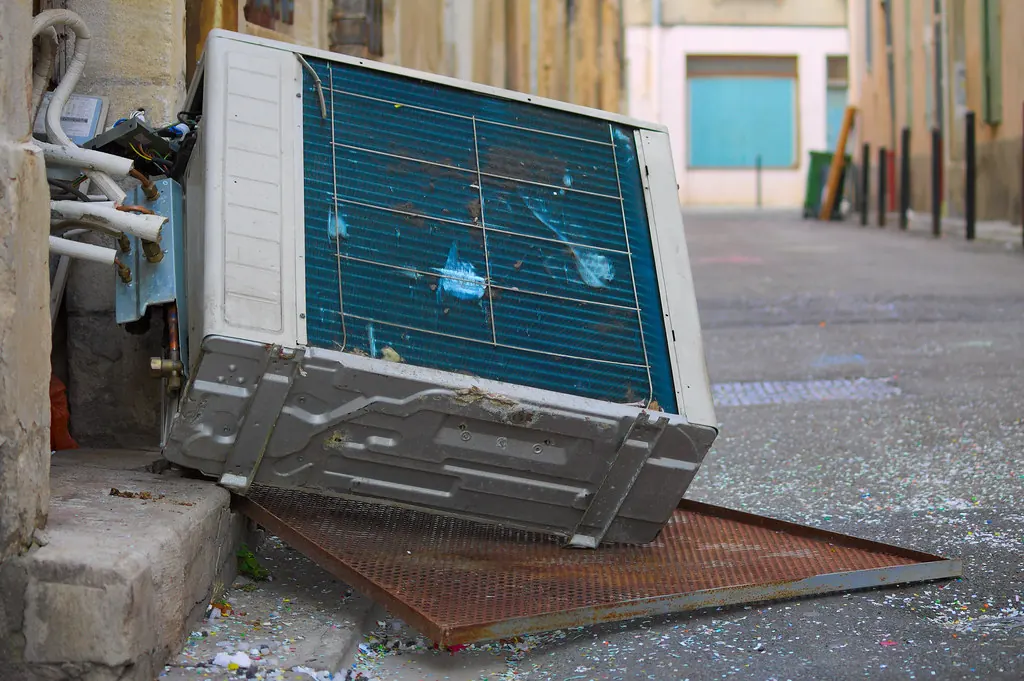
Heat pump outdoor unit installed beside a house
Home › Services › Heat Pump Repair

Heat Pump Repair in Chula Vista, CA

Heat pump not heating or cooling in Chula Vista? Heat pump repair for reversing valves, compressors, defrost and airflow faults. Call now for service.

Chula Vista & San Diego County · heat pump repair Chula Vista CA

Diagnosis firstTesting under load before any part is ordered — so the repair fixes the fault, not the symptom.
Chula Vista focusEastlake heat, bayfront salt air, older west-side ducts — the local patterns that shape every repair.
Whole-system checksHeating and cooling tested together, so a fault in one season is not discovered in the next.
Clear explanationsWhat failed, why it failed, and what the repair involves — in plain language, before any work begins.
Heat Pump Repair

What heat pump repair means for your home

Heat pump repair is the diagnosis and correction of faults in a system that both heats and cools: the compressor and refrigerant circuit it shares with an air conditioner, plus the reversing valve, defrost controls, and auxiliary heat that make the heating mode work. A repair visit tests the system in both modes, because a fault that hides in one mode often shows itself in the other.

The reversing valve is the heart of the difference. It is a valve in the refrigerant circuit that changes the direction of flow, switching the indoor coil from cooling to heating. When it sticks, the system gets locked in one mode — cooling in January or heating in July — and the thermostat cannot change it. Defrost is the other heat-pump-specific system: in cool, humid weather the outdoor coil can frost over, and the system briefly reverses to melt the frost. When defrost fails, ice builds up, airflow drops, and the system stops heating. Both are faults an air conditioner never has, and both need a technician who knows heat pumps specifically.

Heat pump outdoor unit installed beside a house
Signs

Signs you need heat pump repair

Causes

What causes heat pump repair problems

  • Reversing valve failure — stuck in one mode, or leaking refrigerant internally between modes.
  • Defrost control failure — the outdoor coil ices over and the system cannot clear it.
  • Refrigerant leaks, which reduce capacity in both heating and cooling.
  • Compressor wear after years of year-round operation — a heat pump runs in both seasons, so it accumulates more hours than an AC-only system.
  • Outdoor fan motor failure, which stops airflow across the outdoor coil in both modes.
  • Thermostat or control faults that confuse the mode switching or the auxiliary heat staging.
Heat pump outdoor unit installed beside a house
How it works

How heat pump repair works

Test both modesThe system is run in cooling and then in heating, with temperatures measured at the vents in each mode. The mode that fails — and how it fails — points to the fault.
Check the reversing valveThe valve is tested for proper switching and for internal leakage. A valve that sticks or leaks is the most common heat-pump-specific failure.
Check defrostThe defrost cycle is observed or forced, and the outdoor coil is inspected for ice that should have cleared. Defrost sensors and controls are tested.
Check the shared systemsRefrigerant pressures, airflow, filter, and electrical components are tested the same way as on a conventional system, because most heat pump faults are still ordinary faults.
Repair and verify in both modesThe failed part is replaced and the system is run through a full cycle in each mode, so the repair is confirmed for summer and winter, not just for the season you are in.
Included

What heat pump repair includes

Options for heat pump repair

Reversing valve repairA stuck or leaking reversing valve is repaired or replaced so the system can switch modes again. This is the repair that restores a heat pump that works in one season but not the other.
Defrost repairA failed defrost sensor, control board, or timer is replaced so the outdoor coil can clear ice and the system can heat properly in cool, damp weather.
Refrigerant repairA leak is located and repaired, and the system is recharged. A recharge without a leak repair is a temporary fix that ends with the same problem.
Replacement discussionWhen the compressor has failed on an older heat pump, or when the system needs major work in both modes, replacement is discussed as a comparison — with the system's age and the home's year-round needs in view.
Repair or replace

Repair or replace?

A repair is the right call when the failure is a single component — a reversing valve, a defrost sensor, a fan motor, a capacitor — and the compressor and coils test healthy. Heat pumps in Chula Vista work in a gentle climate, so the equipment ages well and single-component repairs usually buy years of service.

Replacement enters the conversation when the compressor has failed on an older system, when refrigerant leaks keep returning at the coil, or when the system struggles in both modes despite repairs. The deciding factors are the age of the equipment, the condition of the coils, and how many hours a year the system runs — and a heat pump runs year-round, so its hours add up faster than an AC-only system's. A load calculation and a duct inspection give you the facts for the comparison.

Maintenance

Keeping your system healthy

  • Keep the outdoor unit clear of leaves and debris year-round — a heat pump needs airflow in both seasons.
  • Change the filter every one to three months, since the system runs all year and the filter loads faster.
  • Watch the outdoor unit on cool, damp mornings: a thin frost that clears is normal, but ice that builds up and stays is a defrost problem.
  • Have the system checked once a year, with both modes tested — a heating fault found in summer is far better than one found on a cold morning.
  • Do not switch the thermostat to emergency heat unless the heat pump itself has failed — emergency heat is expensive to run and is not a substitute for a repair.
Local

Heat Pump Repair in Chula Vista

Chula Vista is one of the most suitable climates in the country for a heat pump. Winter lows in the 40s and 50s are well within the range where a heat pump heats efficiently, and the system never has to fight the deep cold that challenges heat pumps in other parts of the country. Summer highs in the 70s and 80s on the west side, and the 80s and low 90s inland, are equally comfortable for the cooling side. A heat pump here is not a compromise — it is the right equipment for the climate.

That climate fit shapes the failure pattern. Defrost problems are less common here than in colder regions, because frost is rare, but they still occur on cool, damp winter mornings, especially in the inland valleys where overnight temperatures drop lower. Reversing valve wear is the more common heat-pump-specific failure, because the valve switches every time the seasons change and every time the thermostat changes modes. And because the system runs year-round, the compressor and fan motor accumulate more operating hours than an AC-only system of the same age — which is why the yearly check matters more, not less, for a heat pump.

Choosing a provider

Questions to ask

  • Ask whether the system was tested in both modes, not just the one that is failing now.
  • Ask what the reversing valve tested at — a valve that sticks is the most common heat-pump-specific fault.
  • Ask whether the defrost cycle was observed, especially if the outdoor unit has been icing over.
  • Ask what the refrigerant pressures measured in each mode, so you know the diagnosis covers the full circuit.
Mistakes to avoid

Common mistakes

  • Running on emergency heat for weeks instead of repairing the heat pump — the electric bill climbs sharply and the fault does not fix itself.
  • Assuming a heat pump that cannot heat in winter needs a new furnace, when the fault is the reversing valve.
  • Ignoring ice on the outdoor unit because the system still runs — the ice blocks airflow and the compressor works harder every hour it runs that way.
  • Skipping the yearly check because the system works in summer, then discovering a heating fault on the first cold morning.
In depth

Heat pumps and the defrost cycle — winter mornings in Chula Vista

The defrost cycle is the part of a heat pump that most homeowners never notice — until it stops working. On cool, damp winter mornings, the outdoor coil can frost over as it pulls heat from the outdoor air. The system handles this by briefly reversing itself: it switches to cooling mode for a few minutes, the hot refrigerant melts the frost off the outdoor coil, and then it switches back to heating. During those few minutes, the air from the vents may feel cooler than usual, and the outdoor fan may stop — both are normal parts of the cycle. A thin layer of frost that appears and clears is the system working as designed.

The problem is when the frost does not clear. A thick coat of ice that builds up and stays means the defrost cycle is not running — a failed sensor, a failed control board, or a failed timer — and the system loses capacity as the ice blocks airflow through the outdoor coil. The house gets cooler, the system runs longer, and the auxiliary heat starts running to compensate, which raises the electric bill sharply. In Chula Vista, defrost problems are less common than in colder regions, because frost is rare — but they still occur on cool, damp winter mornings, especially in the inland valleys where overnight temperatures drop lower. The signs to watch are ice that builds up and stays, a system that runs constantly in heating mode, and auxiliary heat running all the time. All three point to the defrost system, and all three are fixed by repairing the sensor or control that runs the cycle.

Related services

Other heating & cooling services

Technician repairing a residential air conditioning unit

AC Repair

AC not cooling in Chula Vista? Local air conditioning repair for every brand and system type, from frozen coils to failed compressors. Call now for se

Learn more →
Technician working on an air conditioning unit during a repair call

Emergency AC Repair

AC stopped working on a hot Chula Vista afternoon? Emergency air conditioning repair for no-cool, breakdowns and system failures. Call now for help.

Learn more →
New air conditioning outdoor unit being installed beside a home

AC Installation

New AC installation in Chula Vista — central air, ductless mini splits and heat pumps sized for your home. Call now to discuss your installation.

Learn more →
Questions

Frequently asked questions

How does a heat pump heat a home in Chula Vista?

A heat pump moves heat from the outdoor air into the house, even when the outdoor air feels cool. In Chula Vista's mild winters, where lows rarely leave the 40s, there is plenty of heat in the outdoor air for the system to collect. It is the same process as cooling, run in reverse.

Why does my heat pump blow cold air in heating mode?

If the air is cool rather than warm, the reversing valve may be stuck in cooling mode, the system may be in a defrost cycle, or the refrigerant charge may be low. A technician tests the system in both modes to find which one it is.

Is ice on my heat pump normal?

A thin layer of frost during a defrost cycle on a cool, damp morning is normal, and it should clear within minutes. A thick coat of ice that builds up and never clears means the defrost cycle is not working, and the system needs attention.

What is auxiliary heat, and why does it matter?

Auxiliary heat is a backup heater that helps the heat pump on the coldest mornings. It is meant to run briefly, not constantly. If it runs all the time, the heat pump is not doing its job, and the running cost rises sharply because auxiliary heat uses far more electricity.

How long do heat pumps last in Chula Vista?

A well-maintained heat pump in this climate typically lasts around fifteen years, sometimes longer. Because it runs year-round, it accumulates more hours than an AC-only system, so yearly maintenance matters more, not less.

Can a heat pump replace both my AC and my furnace?

Yes, in this climate. A heat pump cools in summer and heats in winter from the same equipment, and Chula Vista's mild winters are well within its heating range. Many homes here run a heat pump as their only heating and cooling system.

Why does my heat pump run constantly in winter?

A heat pump that never satisfies the thermostat may be low on refrigerant, may have a failing compressor, or may be running on auxiliary heat because the heat pump itself cannot keep up. It can also be a thermostat issue. The diagnosis starts with temperature readings in heating mode.

Do heat pumps work well in Chula Vista's inland neighborhoods?

Yes. Inland neighborhoods are warmer in summer and cooler on winter nights, but both are well within a heat pump's operating range. The system works harder in Eastlake or Otay Ranch than near the bayfront, but it is designed for exactly that range.
Need heating or cooling help in Chula Vista?

Describe the symptoms — what the system is doing, which rooms are affected, and whether the outdoor unit is running — and get a clear next step.

Call Now

Contact

Get in touch

For AC repair, furnace repair, heat pump and mini split service, and maintenance across Chula Vista and San Diego County, reach out through the contact page.

Call Now

Service details

HoursMon–Fri 7:00 AM–10:00 PM ET · Sat 8:00 AM–10:00 PM ET · Sun 7:00 AM–9:00 PM ET Emailhello@chulavistahvacpros.com AreasChula Vista, San Diego, National City, Imperial Beach, Bonita, La Mesa, El Cajon, Lemon Grove, Spring Valley, Coronado, Santee ZIPs91910, 91911, 91913, 91914, 91915
☎ Call Now
Chula Vista HVAC ProsHeating & cooling help — Chula Vista & San Diego County