By Chula Vista HVAC Pros · 2026-11-17 · Chula Vista, CA
Mini split for a garage conversion in Chula Vista — why it is the standard fix, how sizing and placement work, and what the install involves.
Chula Vista has a large number of garage conversions — a garage becomes a home office, a studio, a bedroom for a returning family member, or a rental unit. The conversion is usually straightforward: insulation, drywall, flooring, and a door. The cooling is the part that gets complicated, because the garage was never part of the central system's design. It has no ducts, and running new ducts through finished walls is expensive and disruptive. A ductless mini split is the standard answer, and it is a job local installers do every week.
The central system was sized for the house as it was built — before the garage became a room. The ducts were laid out for the original rooms, and there is no duct to the garage, because the garage was never meant to be cooled. Extending the central system means running new ducts through finished walls and ceilings, rebalancing the whole system, and often upsizing the equipment — a project that costs more than the mini split and disrupts the house for days. And even if the ducts are extended, the converted garage has different thermal needs from the rest of the house: thinner insulation, a large door, and sun exposure that the original rooms do not share. A room with different needs deserves its own system, and a mini split is that system.
A mini split is a wall-mounted indoor head in the room, connected by a small line set to an outdoor unit. The head mounts high on the wall, the line set runs through a hole only a few inches wide, and the room is cooling the same day. The head has its own controls, so the converted room has its own temperature — cool when it is occupied, eased off when it is not — without affecting the rest of the house. Most mini splits are heat pumps, so the same head heats the room in winter, which matters in a garage conversion: the room's thin insulation makes it cold on winter mornings as well as hot on summer afternoons. One head, one outdoor unit, and the room is comfortable all year.
The head has to be sized to the room, and a converted garage is not a standard room. The insulation is often thinner than the rest of the house, the ceiling may be lower, and the large door — even an insulated one — is a thermal weak point. A load calculation for the room accounts for all of it: the size, the windows, the sun exposure, and the insulation. A head that is too large short-cycles and leaves the room clammy; a head that is too small runs constantly and never quite cools the room on a hot afternoon. Placement matters too: the head goes where its airflow reaches the whole room, high on an interior wall, away from direct sun on the sensor, with a clear path for the air to circulate. A head mounted behind a tall cabinet, or above a heat source, will misread the room and cool badly.
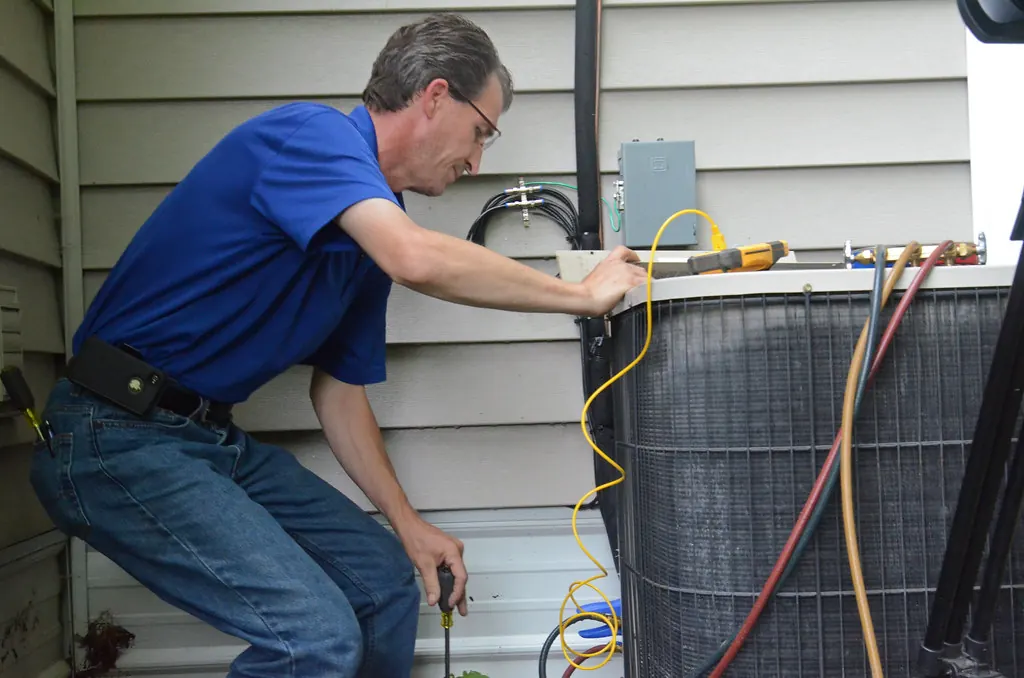
A single-zone mini split installation is usually completed in a day. The indoor head is mounted and levelled, the outdoor unit is set on a level pad with clear airflow, the line set and drain line are run and insulated, the refrigerant circuit is evacuated and charged, and each head is tested through a full cooling and heating cycle. The permit and inspection are part of a proper installation. The homeowner gets a walkthrough of the controls — the remote, the modes, the fan speeds — and the filter cleaning that keeps the head working quietly. The filter is the maintenance that matters most in a converted garage: the room's concrete floor and stored items load the small filter faster than a bedroom's filter loads, and it needs cleaning every few weeks through the cooling season.
A mini split cools only the room it serves, so the energy goes where the people are. A converted garage used as a home office during the day is cooled during the day and eased off at night; a bedroom is cooled at night and eased off during the day. That pattern is the efficiency advantage of the mini split over extending the central system, which would cool the garage whenever it cools the house. The things to watch are the filter, the drain, and the outdoor unit: a filter that is not cleaned chokes the small head quickly, a drain that blocks drips water down the wall, and an outdoor unit crowded by stored items cannot breathe. All three are homeowner habits, and all three are covered in the walkthrough when the system is installed.
A garage conversion is a change to the use of the space, and the city treats it as one. The conversion itself — the insulation, the drywall, the flooring, the electrical work — generally requires a permit, and the HVAC work is part of that permit: the mini split installation, the electrical circuit that feeds it, and the condensate drain that carries water away from the house. The City of Chula Vista requires permits for HVAC installations, and a mini split is no exception. The permit is not a formality — it is the record that the work was done to code, and it matters when the house is sold, because a conversion without a permit is a conversion that a buyer, an inspector, or an appraiser will question. The installer handles the permit as part of the installation, and the inspection that follows confirms the work: the head is mounted correctly, the line set is run and insulated properly, the drain slopes away from the house, and the electrical connections are safe. A conversion done with a permit is a room that is part of the house, with the documentation to prove it. A conversion done without one is a room that will cause problems at sale time, and the mini split that cools it will be part of that problem. Ask the installer about the permit before the work begins, and make sure the inspection is scheduled — it is part of doing the job properly, and it protects the household that lives in the room.
The mini split is the cooling for a garage conversion, but the insulation is what decides whether the cooling works. A garage was built as a garage: thin walls, a concrete floor, a large door, and often no insulation at all in the walls or the ceiling. A conversion adds insulation, drywall, and flooring — but the quality of that insulation decides how hard the mini split has to work, and how comfortable the room feels. A well-insulated conversion holds its temperature with a modest mini split head, running in steady cycles. A poorly insulated conversion leaks heat in summer and cold in winter, and the head runs constantly without ever quite catching up — the same symptom as an undersized system, caused not by the equipment but by the envelope around it. The load calculation for the room accounts for the insulation as it is, not as it should be, and the head is sized for the room that exists. But the conversion is also the moment to improve the insulation, because the walls are open and the work is accessible — and the insulation added during the conversion pays back every month the room is used, in comfort and in the electricity the head does not have to use. The mini split and the insulation are a pair: the head provides the cooling, and the insulation keeps it in the room. A conversion that invests in one and neglects the other is a room that will always feel a little too warm in July and a little too cold in January, whatever the equipment.
The remote control habit is the one that keeps a garage mini split working quietly for years. The head's remote sets the mode, the temperature, and the fan speed — and the habit is to use the modes as they were designed: cooling in summer, heating in winter, and the fan on Auto rather than on High, so the head adjusts its own airflow to the room. The filter is the maintenance that matters most in a converted garage, and the habit is to clean it every few weeks through the cooling season — the room's concrete floor and stored items load the small filter faster than a bedroom's filter loads, and a dirty filter is the most common cause of weak airflow from a head. The drain is the second habit: watch for water dripping from the head, which means a blocked drain, and have it cleared before it stains the wall. And the outdoor unit is the third: keep it clear of stored items, so it can breathe. Three habits — the remote, the filter, the drain — and the mini split will cool the converted room for its whole life, quietly and efficiently, without ever becoming a problem the household has to think about.

How often does an AC need servicing in Chula Vista? The yearly schedule, what a tune-up covers, and why spring is the time to book.
Read more →
Repair or replace your AC in Chula Vista? The age, cost, and condition factors that decide it — and the questions to ask before you choose.
Read more →
How long does an AC last in San Diego County? The typical lifespan, what shortens it, and the habits that add years to your system.
Read more →Yes — garage conversions are one of the most common mini split installations in Chula Vista. The room has no ducts, and a mini split cools it without any ductwork.
A single-zone system is usually installed in a day. The assessment before the work — room measurement, head placement, outdoor unit location — gives a realistic schedule.
Yes. Most mini splits are heat pumps, so they heat in winter as well as cool in summer. A converted garage's thin insulation makes it cold on winter mornings, and the same head covers both seasons.
HVAC installations generally require a permit, and a mini split is no exception. Ask the installer about the permit and inspection process for your installation.
Every few weeks during the cooling season. The room's concrete floor and stored items load the small filter faster than a bedroom's filter loads, and a dirty filter is the most common cause of weak airflow.
Describe the symptoms — what the system is doing, which rooms are affected, and whether the outdoor unit is running — and get a clear next step.
For AC repair, furnace repair, heat pump and mini split service, and maintenance across Chula Vista and San Diego County, reach out through the contact page.